
Human innovation
A lab diamond (also known as a laboratory diamond or synthetic diamond) is a diamond that is not created in nature, but is grown in a laboratory by humans.
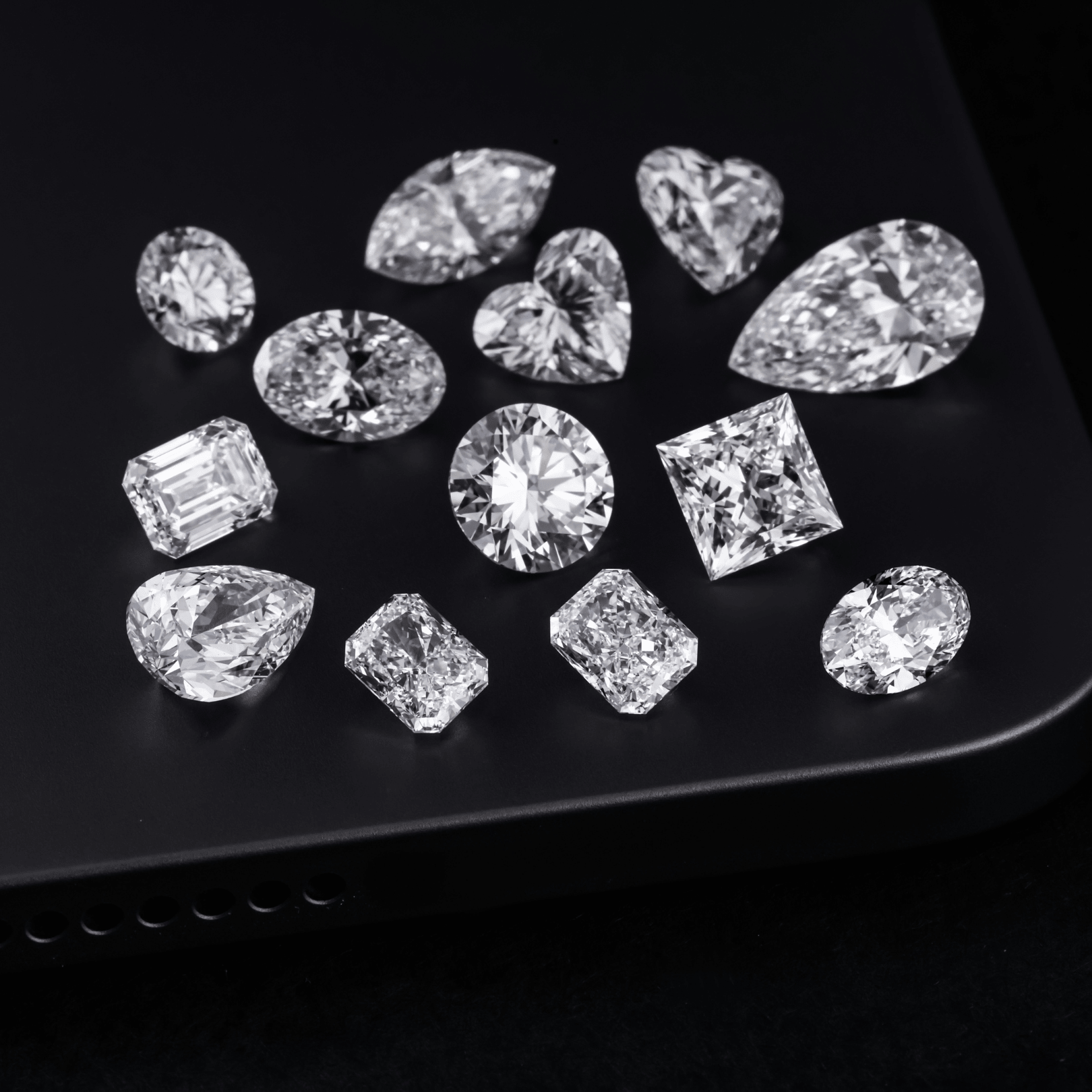
What is a lab-grown diamond?
A lab-grown diamond is a stone that is formed under controlled conditions in a laboratory, but is chemically, optically, and physically identical to a natural diamond. The difference lies in its origin—not in its structure.
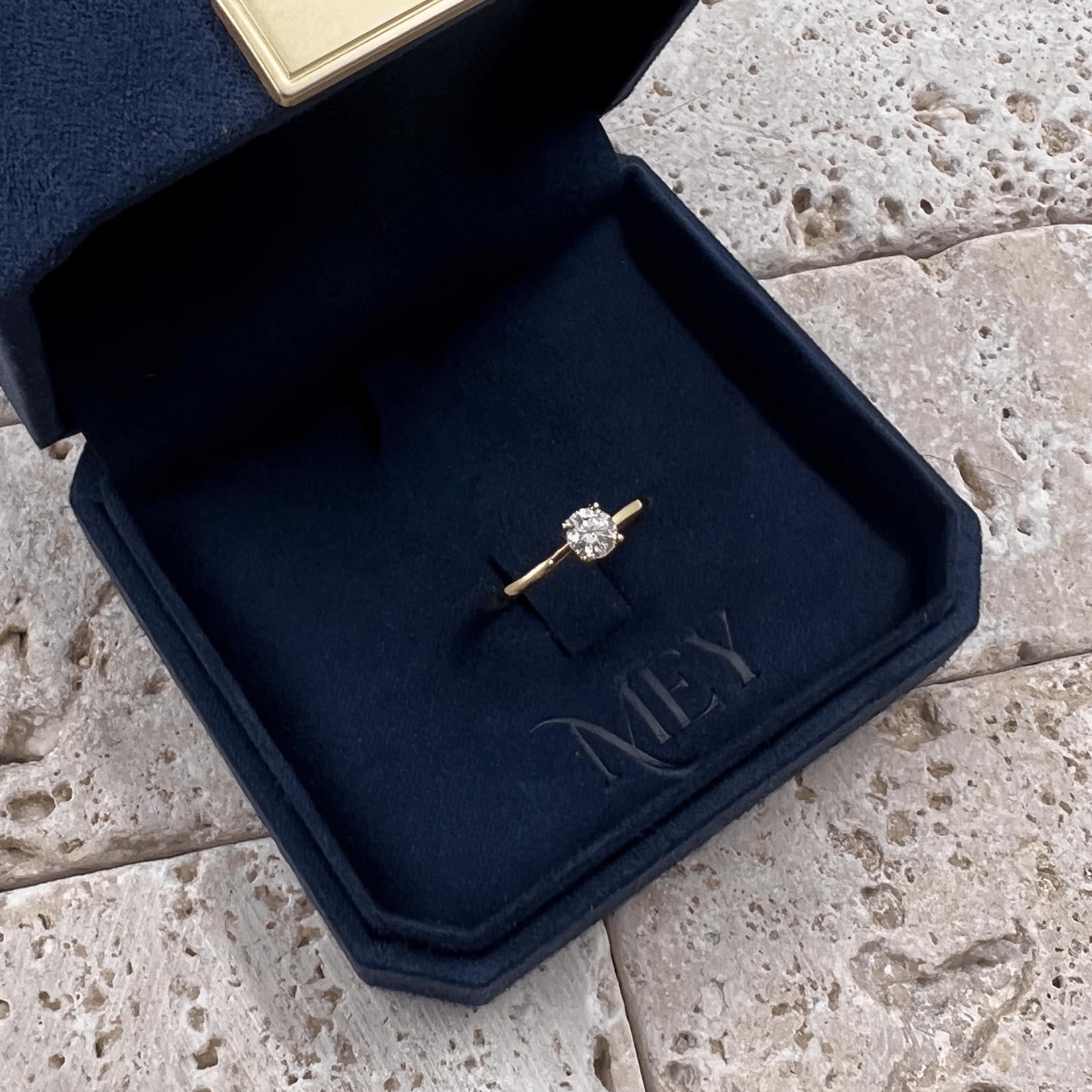
When to choose lab-grown?
For customers looking for a budget-friendly alternative, a lab-grown diamond can be a valuable choice. The stone offers the same brilliance but is more affordable, especially when it comes to larger diamonds.

Our vision
We believe that every piece of jewelry should be a conscious choice. That is why we offer lab-grown diamonds exclusively on request. The choice between natural or lab-grown remains a personal one—we are happy to guide you in both.
Would you rather not have custom-made clothing and prefer to choose directly from an exclusive collection? Discover the MEY collection here: www.meyjewels.be

Origin & ethics
The origin of LAB diamonds, like natural diamonds, is difficult to trace.
They are mostly produced in China, but there are also factories, such as in America, that run entirely on green energy.

A nuanced view of lab-grown diamonds
No mining: Lab-grown diamonds avoid physical mining from the earth. This means there are no large-scale disruptions to ecosystems, soil displacement, or landscape destruction.
What is often forgotten...

Energy consumption is extremely high
Producing a single diamond in a laboratory requires large amounts of electricity. This is particularly true of the HPHT (High Pressure, High Temperature) process, which simulates extreme heat and pressure (over 1500 °C and 5 GPa).
Many factories are located in countries such as China and India, where electricity is largely generated by coal-fired power plants. As a result, the CO₂ emissions and ecological footprint per carat of a lab-grown diamond can sometimes be equal to or even greater than those of a responsibly mined natural diamond.
Machines are not 'clean'
Building a lab-grown factory requires high-tech equipment, often made with rare metals (such as tungsten, titanium, molybdenum).
These raw materials are mined nonetheless, often under poor social or environmental conditions.
The equipment has a relatively short lifespan and requires regular maintenance and replacement.


Transparency in production
In theory, it is easier to trace the production process of a LAB diamond than in natural mining, which is complex and international.
However, with most LAB diamonds, the origin and ethical conditions in the factories are also unknown.
Mass production ≠ sustainability
Unlike natural diamonds, which are finite in supply, lab-grown diamonds can be produced in large volumes.
The market value of LAB diamonds is falling rapidly, increasing the risk of overproduction and waste—which runs counter to sustainable consumption.